
Euro Plant Tray: count EPT plant trays in a stack when the individual ID is not enough
Every EPT tray carries its own ID. At the dock, on the return and at the site, what usually needs counting is the whole stack. PixelEdge captures the quantity by camera. More about the system: europlanttray.com
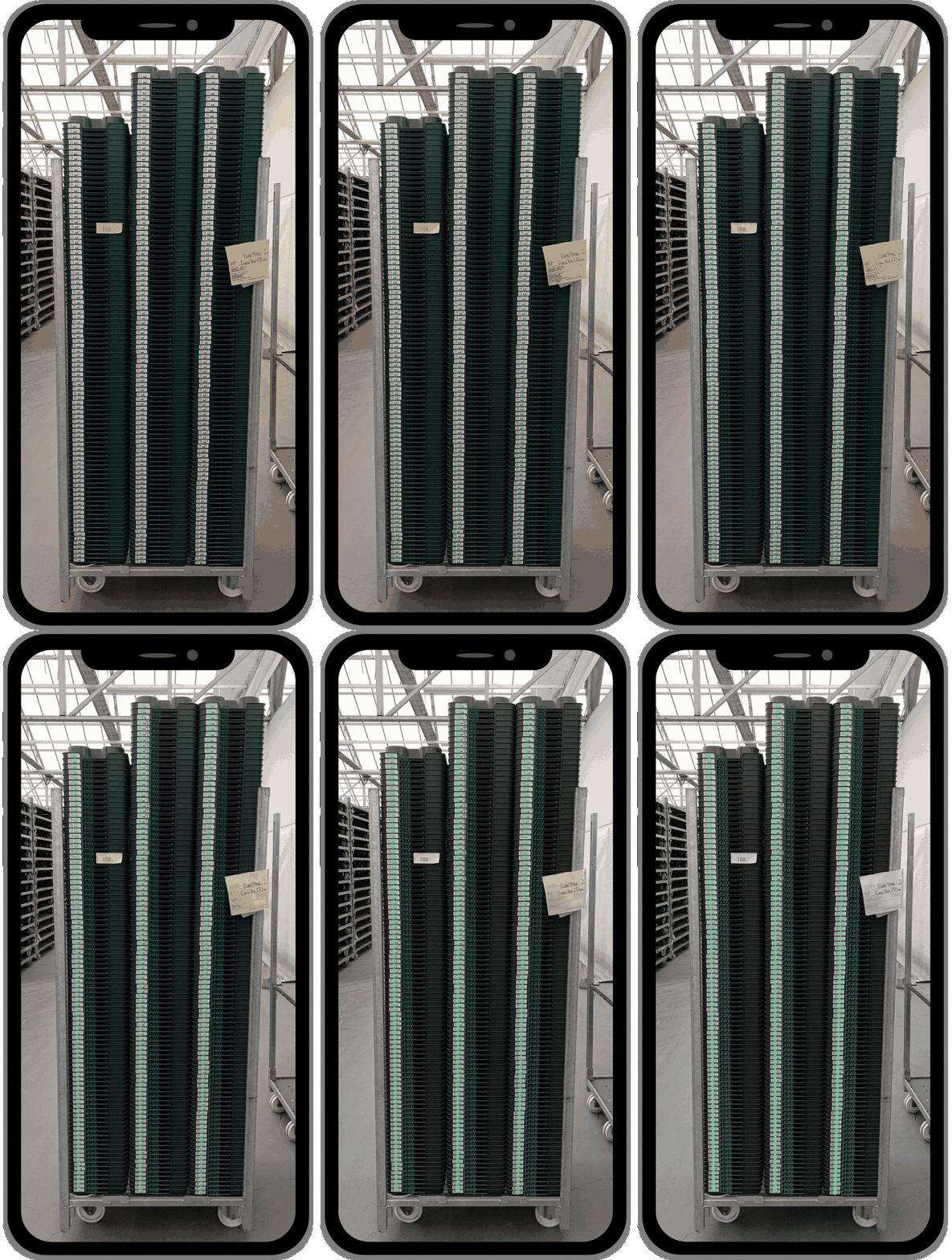
Edge.Count counts the trays in the stack.
Individual ID on the tray, quantity in the stack
Euro Plant Tray is the returnable system for plant trays (europlanttray.com). Counting EPT trays here means the quantity in the stack. Each tray carries a barcode, a Datamatrix and an RFID tag with its own serial number. That assigns the individual tray digitally.
The members’ mission: to clearly reduce single-use plastic in the green industry, together. Euro Plant Tray connects plant producers, wholesalers and retailers across Europe. The tray stays in circulation instead of leaving the loop as single-use plastic after transport.
In circulation, the dock, the return and the site raise a different question: how many trays are in this stack? The label is not always usable for that. It can be missing, covered or damaged, and plants can overhang it.
The ID is not the quantity. Barcode, Datamatrix and RFID belong to the individual tray. In a nested stack, many trays sit inside one another. The quantity of the load is that piece count.
- Single scan instead of stack quantity Barcode, Datamatrix and RFID identify the tray. They do not replace counting a full, nested stack.
- Nested stack Empty trays nest at 20 mm. On a euro pallet that is, depending on type, more than 100 trays per stack. The quantity is that piece count.
- Manual counting Counting stacks by hand ties people to the dock and the return and does not produce one shared record.
- Different delivery paths Wholesale, direct delivery and return need the same quantity, or the stock drifts apart.
That calls for a count that sees the stack, even when the label is missing, damaged, or plants overhang it.

Key-Account Manager Euro Plant TraysAI-based image recognition complements digital tray capture: stocks can be checked faster by camera and manual counting can be reduced.
The camera counts the stack
PixelEdge counts the stack by camera. On site, Edge.Count photographs the stack. The counting station captures it in flow, without taking each tray out of the stack. The camera recognizes and counts the tray by its shape, even when no label is visible, the label is damaged, or plants overhang the label. The quantity can be taken into the existing tray administration. Barcode, Datamatrix and RFID remain the ID of the individual tray as long as the label can be read.
- Stack in one step The camera counts the trays in the stack. Nobody has to free each tray for that.
- Two capture points Edge.Count at the site, the counting station at the drive-through. The same task, fitted to the process.
- Even without a readable label The camera recognizes and counts the tray by its shape. A missing, covered or damaged label does not change the quantity, even when plants overhang the label.
- Serial number on the label Barcode, Datamatrix and RFID carry the serial number as long as the label can be read. The camera supplies type and quantity.
- The same quantity path Wholesale, direct delivery and return can book the same piece count.
- Image as the record The capture image stays with the count. Alignment on the stack rests on the same record.
Advantages of camera-based recognition over RFID
RFID carries the serial number of a tray whose tag responds. The camera supplies type and quantity from the image of the stack. That also holds where the label is not available for a read.
- Quantity in the nested stack On a euro pallet, depending on type, more than 100 trays sit in one stack, only 20 mm high. RFID needs a response per tag for that. The camera counts the visible trays in one step.
- Tray without a readable label If the label is missing, covered or damaged, the tray stays recognizable by its base size and shape. The quantity does not depend on reading a barcode, Datamatrix or RFID tag.
- Plants over the label If leaves or shoots overhang the label, the camera still recognizes the tray by its shape and counts it. Recognition does not need the label in the image for that.
- Type from the tray The 400 series measures 562 × 253 mm, the 200 series 386 × 279 mm. The camera assigns the type from this base size, even when the serial number on the label was not read.
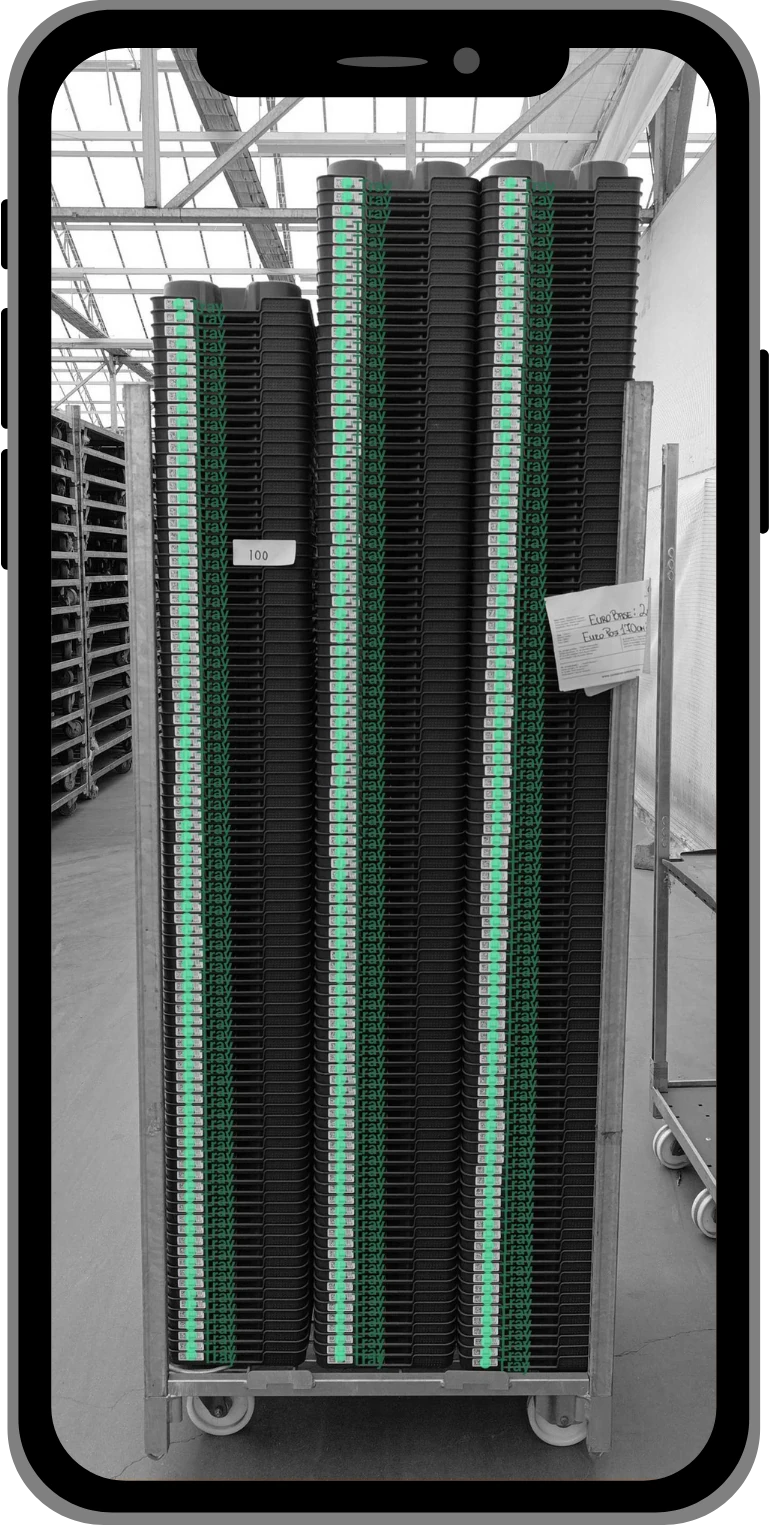
- Direct feedback The camera shows the count in the image. Each recognized tray is marked, the quantity sits beside it. What went into the quantity is visible. RFID returns the tags that responded. Which tray in the stack that belongs to is not shown by the read.
Edge.Count: photograph the stack on site
Where there is no drive-through point, Edge.Count counts the stack from a photo. That covers stock at the site, the handover, and the return before the trays go back into the loop.
The app supplies the quantity without taking each tray out of the stack and scanning it one by one. The image stays with the count and makes the quantity traceable.
Counting station: capture the stack in flow
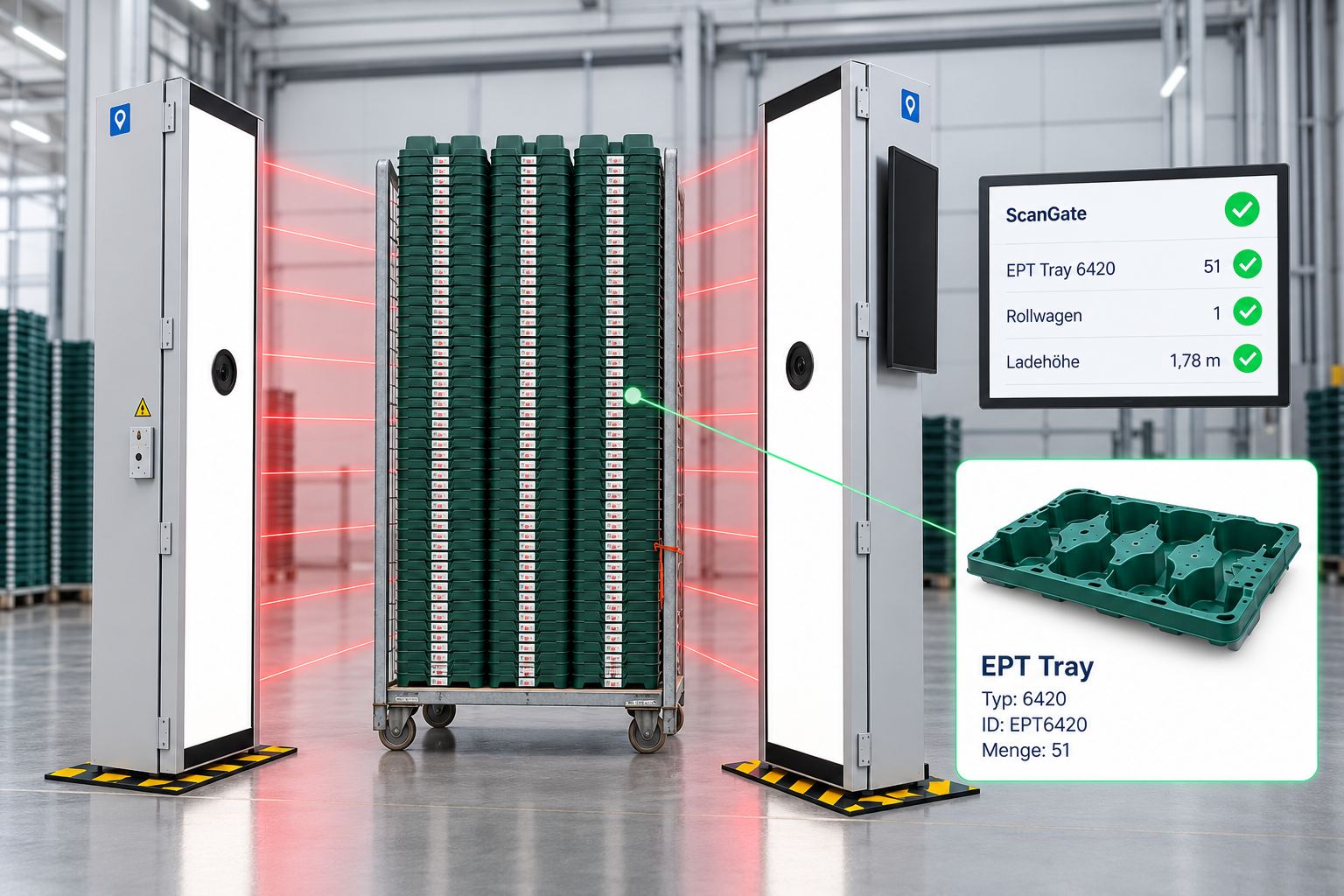
At the drive-through, the counting station takes the same step. The stack passes through, the camera captures the trays. The quantity is there without anyone stopping the stack and scanning tray by tray.
This is camera-based stack capture. The quantity comes from the image. The serial number on the tray stays with barcode, Datamatrix and RFID.
Edge.Trace: the quantity in load carrier management
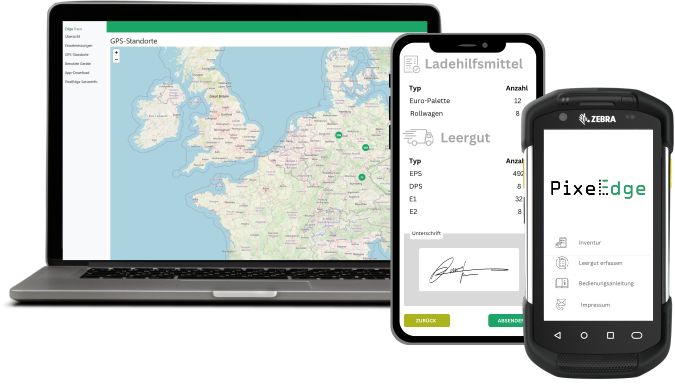
The camera supplies type and quantity. Edge.Trace is the platform where that quantity does not stay as a single photo. Counts from Edge.Count and from the counting station come together there: image, type and quantity, plus the place of capture.
Customers, suppliers and the company’s own back office see the same event. Alignment does not run as email back and forth. A difference can be settled on the captured stack, instead of assembling the record afterwards.
- Count and image in one place Edge.Count and the counting station write the same quantity into Edge.Trace. The capture image stays with the booking.
- Access for customers and suppliers Everyone involved opens the same image, quantity and event. Nobody sends the record on by email.
- Less coordination Follow-up questions about a difference drop away when everyone sees the same evidence.
- Stock and history Movements stay visible in one place, across dock, return and site.
- Connection to existing systems The capture can be connected to ERP, WMS or TMS. Those systems stay responsible for orders and stock.
Common questions about EPT trays and counting
What does PixelEdge count on an EPT tray?
The camera recognizes the tray by its shape and counts the quantity in the stack. On site, Edge.Count does that from a photo; at the drive-through, the counting station does it. Barcode, Datamatrix and RFID on the label carry the serial number as long as the label can be read.
Does camera counting replace the RFID on the EPT tray?
RFID, barcode and Datamatrix remain the serial number of the individual tray. The camera supplies type and quantity from the image of the stack. The two belong in different places: identity on the label, quantity from the capture.
Can EPT trays be counted without a visible label?
Yes. If the label is missing, covered or damaged, the camera still recognizes the tray by its base size and shape. The quantity does not depend on a code having been read.
What happens when plants overhang the label?
The camera still recognizes and counts the tray by its shape. The label does not have to be in the image for that. The serial number on the label remains a separate read, once the label is free and undamaged again.
Why is the individual ID in the stack not enough for the quantity?
In a nested stack, many trays sit inside one another, empty ones only 20 mm high. On a euro pallet that is, depending on type, more than 100 pieces. The ID belongs to the individual tray. The quantity of the load is the piece count of that stack.
Can you see which trays were counted?
Yes. The camera marks each recognized tray in the image, and the quantity sits beside it. What went into the quantity is visible. RFID returns the tags that responded. Which tray in the stack that belongs to is not shown by the read.
Where can the count be used?
Edge.Count photographs the stack on site, for stock, for the handover and for the return. The counting station captures the same stack in flow, without taking each tray out of the stack.
Where does the counted quantity go?
Edge.Count and the counting station supply type and quantity. Edge.Trace keeps that quantity together with the image. Customers and suppliers see the same event, without the record being sent on by email.
Related content
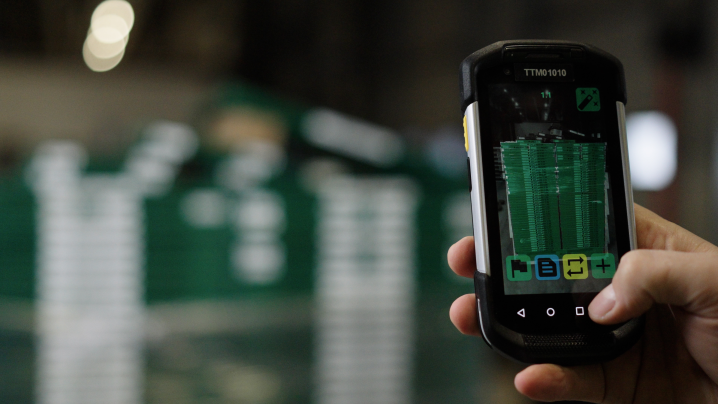
Edge.Count: count on site
Quantity from a photo, for stock, handover and return. The image stays as the record.
Edge.Trace: keep the stock
Count, image and quantity sit in one view for customers, suppliers and the back office.
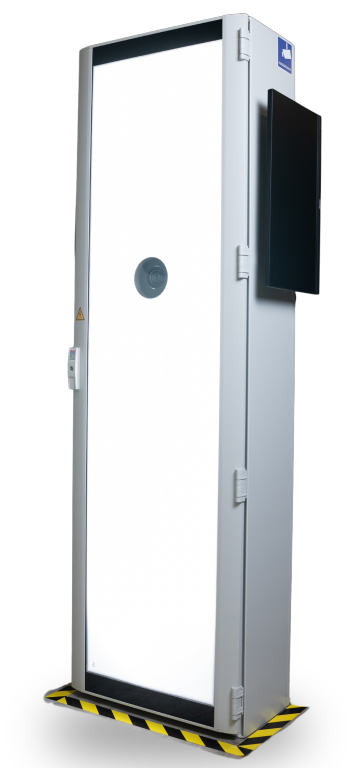
ScanGate: capture in flow
The stack passes through, the camera captures type and quantity. The serial number stays on the label.
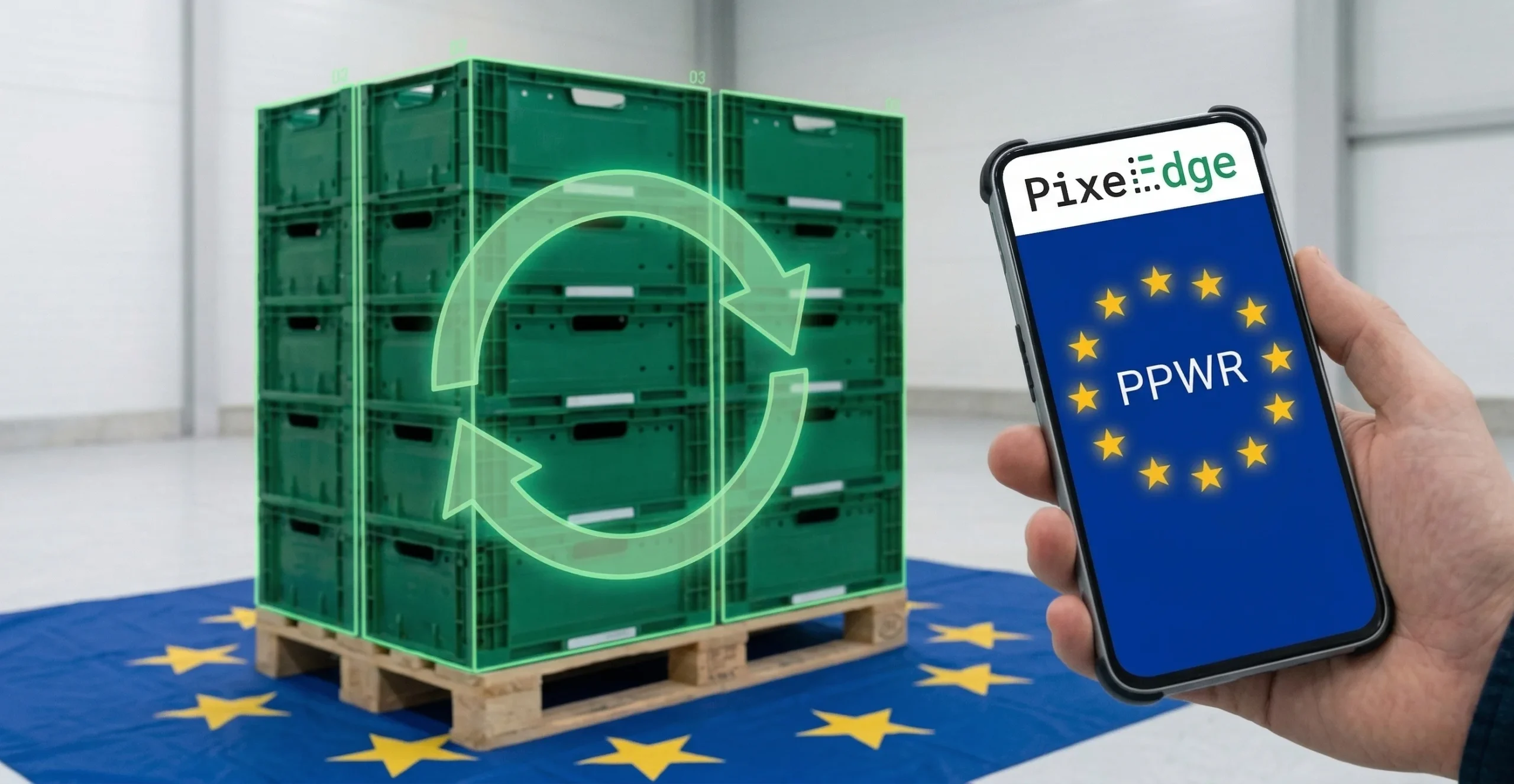
PPWR and returnable logistics
What the packaging regulation changes in circulation, and why quantities in the loop have to stay traceable.
Count the stack without scanning every tray?
Plant trays, missing labels and returns at several points: we show how Edge.Count and the counting station capture type and quantity, and how Edge.Trace holds the stock.
Go to the contact form