
Vision AI in Logistics: Load Carriers Don’t Disappear. They Become Invisible.
Why digital records do not automatically prove what happened in the physical world—and how camera-based AI can close the gap between the dock, the back office and load carrier accounts.
 Markus Weber · Co-Founder & Managing Director
Approx. 12 min read
Markus Weber · Co-Founder & Managing Director
Approx. 12 min read
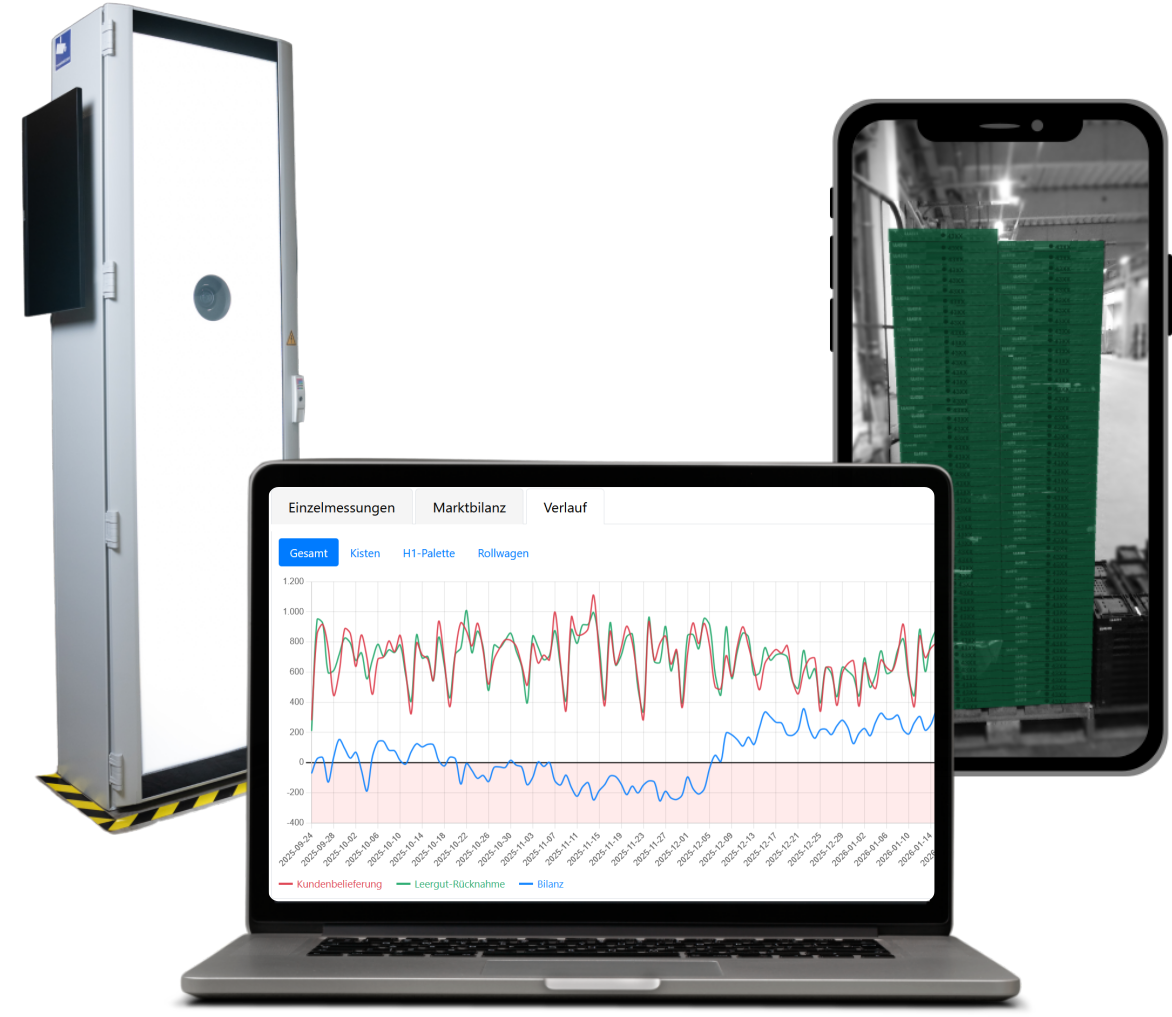
A digital record is not automatically proof of a physical event.
When physical movement becomes digitally invisible
Vision AI in logistics connects visible operations with digital process data: cameras capture load carriers, AI interprets their quantity, type and context, and the event is documented in a traceable way.
This creates an additional data source between physical movement and the ERP, WMS or TMS. It does not replace these systems; it provides them with more reliable input data.
- A digital record alone is not proof of the physical event.
- Image data can link quantity, type, condition and process context.
- Barcode and RFID remain valuable and can be enhanced with visual data.
- Industrial readiness is demonstrated above all in the handling of exceptions.
Pallets, crates and roll cages can be physically present yet still become invisible in the digital process. They have been moved, handed over or returned—but the corresponding record is missing, incorrect or can no longer be conclusively verified after the event.
This lack of visibility is rarely caused by one major error. More often, it results from small discrepancies: a miscounted stack, an incorrect customer assignment, a missed container or a transaction corrected later without a shared factual basis. At the dock, the issue may initially seem minor. In the back office, it becomes an exception case involving queries, account reconciliation and claims processing.
This information gap is the data gap. Four questions are therefore crucial: What information is missing between the physical flow of materials and the digital record? What can Vision AI contribute? Where do barcode and RFID remain the better choice? And why does robust handling of edge cases matter more than a flawless demo?
Vision AI in the Load Carrier Loop
The concise PDF traces the journey from the dock and the data gap to a self-documenting load carrier loop.
Download presentationThe gap emerges before the ERP
Many logistics processes are now largely digital. Orders, routes, inventory and accounts are managed in ERP, WMS or TMS systems. Yet at the points where those systems meet the physical world, one simple question remains unanswered: What actually happened at this point in the process?
A driver may need to record quantities, distinguish between load carrier types, assign the transaction to the correct customer and document the result. With mixed loads, time pressure or varying deposit rates, this is far more than a counting task. A significant share of the process knowledge resides with the person working at the dock.
If an incorrect quantity is entered, the back office consistently processes that information downstream. Digital systems make the process faster and more scalable—but they do not make incorrect input accurate. A small capture error can lead to conflicting records, queries and manual corrections.
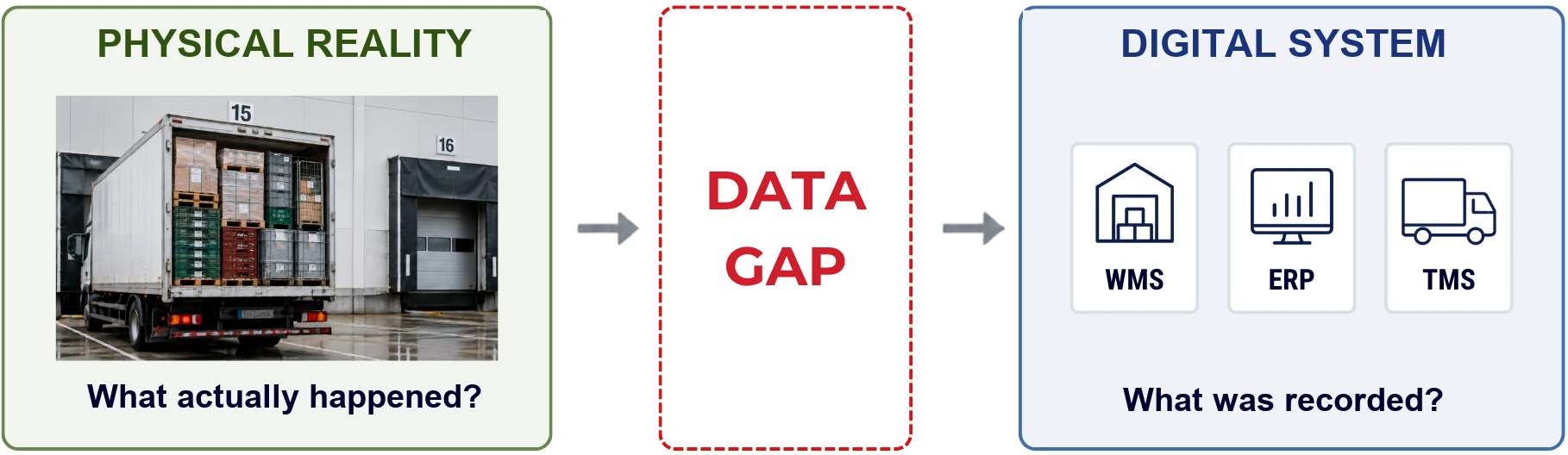
Digitisation does not make incorrect input accurate.
The data gap is therefore not an argument against digitisation. Instead, it shows where digitisation must begin: at the interface with the physical world. The closer capture is to the event itself, the less needs to be reconstructed later from system records, phone calls and memory.
Visual evidence can contain more than the result alone. Alongside the detected quantity, the capture time, transaction reference, load carrier type, visible condition and AI evaluation can all be retained. “17 recorded” becomes a piece of information with a traceable origin.
See, understand, document: what Vision AI can deliver
A camera initially produces only images. Image processing, trained models and process expertise are what turn those images into structured data. Generic image recognition is therefore not enough for logistics applications. The system needs to understand the relevant load carriers, perspectives and process rules.

Depending on the application, visual systems can identify pallets, reusable crates, roll cages or mesh box pallets. They can also evaluate visible characteristics such as colour, shape, contours, label information or direction of movement. Whether a characteristic can be detected—and how reliably—always depends on camera position, visibility, lighting, training data and the specific process.
The term Physical AI describes the broader development: AI no longer works solely with existing digital datasets; it observes and interprets the physical world. In the load carrier loop, this changes where and how data is created.
This does not remove people from the process. During mobile counting, an employee can review the detected result and correct it if necessary. At an automated pass-through point, plausibility rules and defined exception workflows take on that role. The key is to handle uncertainty within the process instead of hiding it.
Barcode, RFID and Vision AI are complementary
Technologies should not be selected on a blanket “better or worse” basis. Barcode, RFID and Vision AI answer different questions. A barcode can convey a unique identity very efficiently. RFID reads compatible tags without contact or direct line of sight. Vision AI adds visible characteristics and situational context.
| Technology | Particularly strong for | Typical requirement |
|---|---|---|
| Barcode / 2D-Code | Unique identification and standardised scanning processes | A suitable code is present, visible and readable |
| RFID | Contactless identification without a direct line of sight | Objects, partners and infrastructure use compatible tags |
| Vision AI | Quantity, visible characteristics, condition and process context | Relevant characteristics are visible from a suitable perspective |
In a real ScanGate deployment, these approaches can work together. The camera can identify the load carrier while also reading relevant 1D or 2D codes. Process logic determines which of several visible labels belongs to the transaction. Direction analysis can additionally determine whether an object is moving in, out or back again.
This combination is particularly valuable in heterogeneous loops. Not every non-serialised load carrier needs a new label or RFID tag simply to capture a quantity. Conversely, unique identification remains useful when an individual asset needs to be tracked throughout its lifecycle.
Standards reduce complexity. Vision AI helps manage the remaining variability.
The final edge cases determine industrial readiness
A demonstration usually shows the ideal scenario: good lighting, an unobstructed view, a clear direction of travel and neatly stacked load carriers. Real material flows add stretch wrap, dirt, overhangs, mixed loads, obscured labels and unplanned movements.
A high detection rate under standard conditions is therefore only part of the solution. Industrial readiness is reflected in how the system handles ambiguous situations. Does it recognise uncertainty? Can it flag conflicting signals? Is there a defined route for manual review?
- Mixed loads containing several load carrier types
- Obscured, damaged or additional labels
- Reversing and unplanned backward movements
- Partially obscured or nested objects
- Damage and visible contour deviations
- People or additional vehicles in the camera image
- Incomplete capture or an unfavourable perspective
- Objects that cannot yet be classified with confidence
Effective exception design will look different from one process to another. In the app, an incomplete capture triggers a request for a new image. At a gate, multiple perspectives and sequential images can be combined. Plausibility rules compare the detection result, order and direction of movement. Critical cases are deliberately routed to a review queue instead of passing unnoticed as confirmed records.
Automation scales both good and bad data. A manual error affecting one record is inconvenient. If an automated system repeatedly produces the same error, it becomes a structural problem. Measurement methodology, process boundaries and exception handling must therefore be planned as carefully as the AI model itself.
Three levels of capture for different process points
There is no single ideal capture point for every load carrier loop. Some quantities arise at decentralised locations such as stores or collection points. Others pass through the same goods receipt area every day. Other information already exists in the ERP, WMS or TMS and needs to be linked to physical evidence.
PixelEdge therefore considers three levels: mobile capture, stationary capture within the material flow, and a central layer for transparency and evidence.
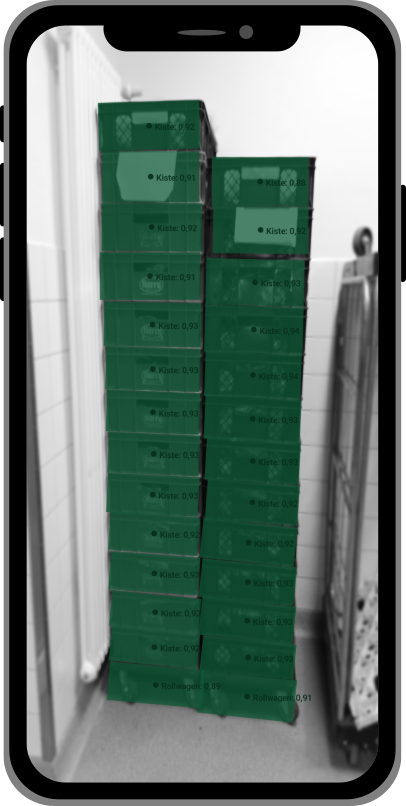
Edge.Count: mobile capture
Take a photo, detect and count load carriers, review the overlay and document the transaction.
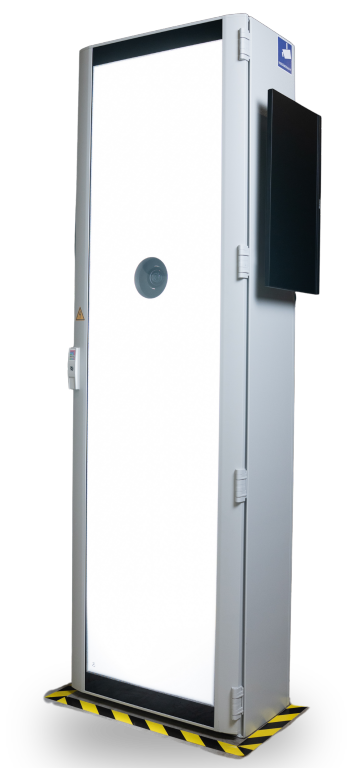
ScanGate: capture within the material flow
Capture objects, codes, direction and context at a fixed pass-through point—without additional individual scans.
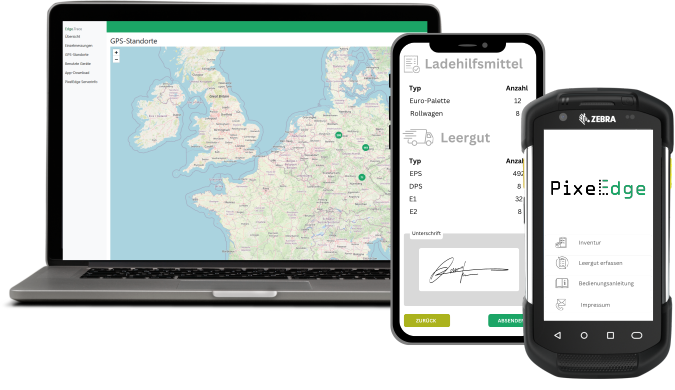
Edge.Trace: connect transactions
Bring captures, existing systems and loop partners together in a shared layer for history and evidence.
These levels do not replace existing core systems. ERP, WMS and TMS remain responsible for orders, inventory and operational control. Visual capture adds information from the physical event; container and returnable management software connects it with accounts, history and partners.
The right level depends on volume, changing capture points, the degree of automation and the depth of evidence required. The journey often begins with a focused feasibility assessment: real images from the process, clearly defined target objects and an honest review of edge cases.
Transparency is also a matter of fairness
Inventory discrepancies are more than numbers. Load carriers tie up capital, need to be replaced and can disrupt operations when they are unavailable. Account reconciliation, claims and safety stock create additional costs.
If a handover cannot be traced, the companies involved lack a shared factual basis. A discrepancy then becomes a negotiation over which record is valid and who bears the financial loss. Visual evidence does not automatically resolve every dispute, but it can anchor the investigation in a specific event.
This changes the role of technology. The goal is not merely to count crates or pallets faster. It is to reduce uncertainty throughout the loop: What was captured? When and where? How confident was the detection? Which discrepancy was reviewed or corrected?
The long-term goal is a load carrier loop that largely documents itself. Movements are captured as they occur, linked to digital transactions and made traceable for the relevant stakeholders. Less reconstruction is needed after the event—and friction between the dock, the back office and loop partners decreases.
Presentation: Vision AI in the Load Carrier Loop
The PDF concisely covers the journey from physical capture and the data gap to a shared evidence layer and is available to download directly.
Vision AI in the Load Carrier Loop
Presentation delivered by Markus Weber at PalettenSymposium 2026 in Hamburg.
Download presentationFrequently asked questions about Vision AI in logistics
What does Vision AI mean in logistics?
Vision AI refers to camera-based systems that automatically interpret images or video sequences from logistics processes. Depending on the application and training data, they can capture objects, quantities, codes, visible characteristics, direction of movement or conditions and provide them as structured process data.
Does Vision AI replace barcode or RFID?
No, not as a general rule. Barcodes and RFID are particularly effective for unique identification. Vision AI adds visible information such as quantity, shape, condition and process context. Combining these technologies makes sense in many applications.
Can load carriers be counted without labels?
Suitable load carrier types can be detected and counted by their visible characteristics without every object carrying an individual code. Reliable performance depends on factors including perspective, stacking pattern, visibility, lighting and the available data.
What is the data gap in the load carrier loop?
The data gap is the disconnect between a physical event and its digital representation. It can arise, for example, when a pallet has physically moved but the quantity or assignment in the ERP, WMS or TMS is missing, incorrect or cannot be objectively verified.
How does Vision AI handle uncertain detections?
This must be explicitly designed into the relevant process. Possible measures include employee confirmation, repeat captures, multiple camera perspectives, plausibility rules and exception review queues. Uncertainty should never be concealed as a confirmed record.
How can feasibility be assessed in your own process?
Representative images or short sequences from the actual process are a useful first step. They allow target objects, perspectives, environmental conditions and typical edge cases to be assessed before planning a mobile pilot or stationary setup.