
PPWR and returnable logistics: EU rules, loops and digital data
Regulation (EU) 2025/40 (PPWR) sharpens the focus on sustainable packaging and waste prevention. For logistics and returnables that often means more valuable containers in circulation – and a greater need for reliable quantities, evidence and transparency.
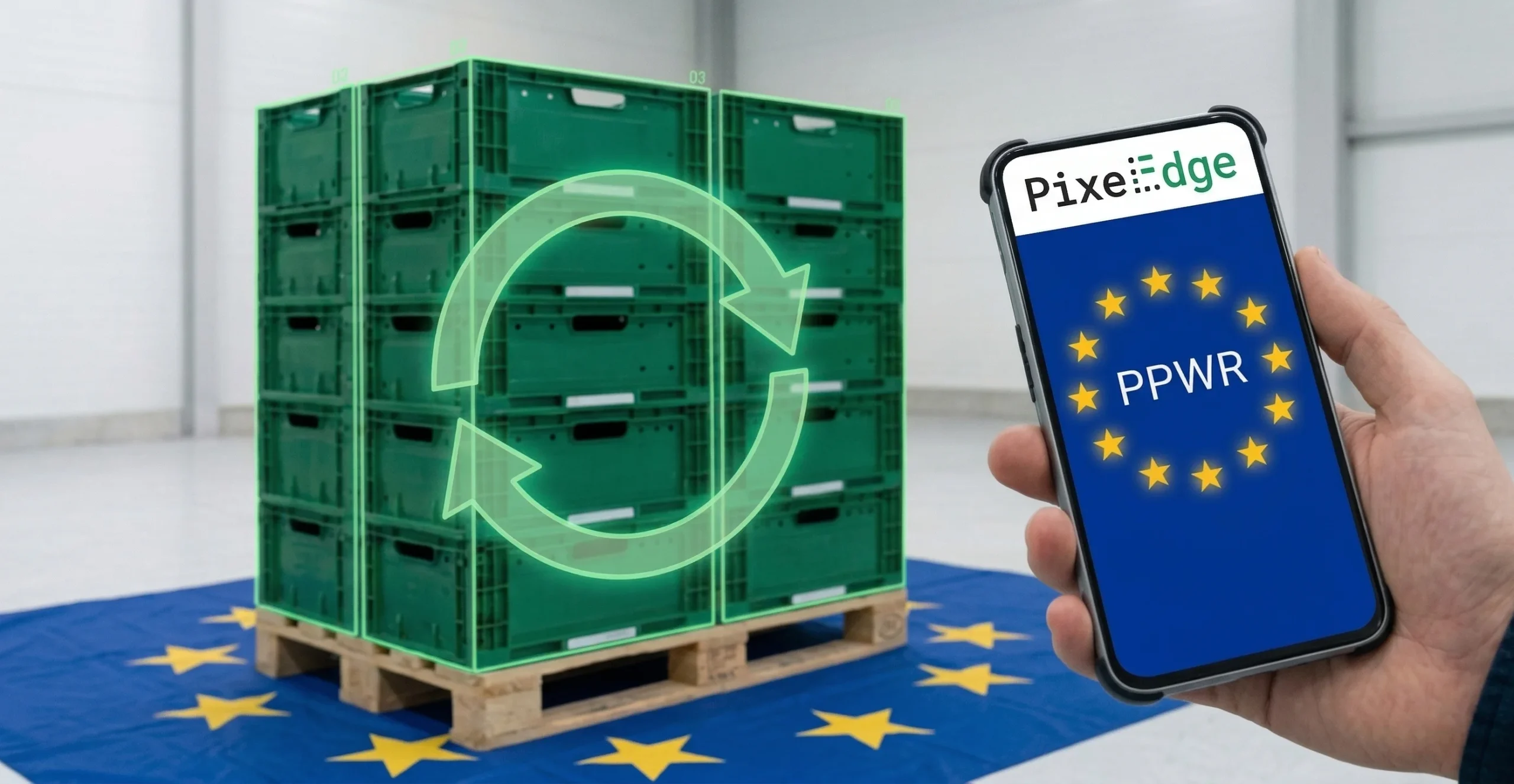
What is the PPWR?
In short: The PPWR is EU Regulation (EU) 2025/40 on packaging and packaging waste. It affects manufacturers, retailers and logistics players in different roles. For transport packaging, returnables and container loops the key point is that cycles must be run reliably and with evidence – alongside the legal detail you should verify on EUR-Lex.
PPWR stands for the Packaging and Packaging Waste Regulation. It is Regulation (EU) 2025/40 of the European Parliament and of the Council of 19 December 2024 on packaging and packaging waste; it repeals the former Directive 94/62/EC and sets EU-wide objectives and requirements on packaging waste reduction, design for recycling, reuse and extended producer responsibility.
The binding text is published on EUR-Lex (CELEX:32025R0040). For businesses, many rules apply in stages (among other things, Directive 94/62/EC is repealed with effect from 12 August 2026; individual obligations have their own dates). Confirm timelines and duties with legal and compliance specialists where needed.
For logistics, returnables and reusable containers the PPWR is rarely only a packaging-design topic: it increases economic and organisational pressure to run loops reliably – with fewer losses, clear quantities and traceable data between sites and partners.
What the PPWR means in practice for logistics & retail
For decision-makers in logistics, retail and manufacturing, the paragraph number matters less than the operational impact: where costs arise, where you need clarity with partners – and where spreadsheets are no longer enough.
- More returnables in circulation: pools, transport and empty-container loops tie up capital; any ambiguity in stock levels affects cash flow and negotiations with pool operators or customers.
- Pressure for traceable quantities: policy and the market push prevention, reuse and more transparent packaging flows. That raises expectations for auditable data instead of estimates – not only for consumer packaging.
- If you still rely mainly on single-use logistics packaging (transport or auxiliary packaging): a transition is often on the agenda – choice of packaging, contractual partners, disposal logistics and alignment with retail. Concrete obligations and deadlines depend on packaging type and role; there is no one-size-fits-all “ban date” – the wording on EUR-Lex (CELEX:32025R0040) is what counts.
- Other workstreams run in parallel: for example extended producer responsibility, reporting, design for recycling and labelling – regardless of whether your bottlenecks are mainly at the dock.
For decision-makers: the biggest economic risk is often not the first call with counsel but data gaps – and after a switch to more expensive returnable containers, damage from shrink and mis-bookings becomes noticeably larger.
Typical PPWR topic areas (read operationally)
- Prevention and reduction of packaging waste: less “packaging per unit” – in the supply chain often a debate about load carriers, transport means and empty runs.
- Recyclability: requirements on materials and design – affecting manufacturers and those placing packaging on the market; logistics must still handle the chosen packaging efficiently.
- Reuse and reuse systems: stronger orientation toward returnables – which stresses operational processes (return flow, cleaning, allocation) and data quality.
- Labelling and information: more harmonisation – relevant for logistics when master data and IT interfaces must keep pace.
- Extended producer responsibility (EPR): cost and reporting logic on the manufacturer/market side – in parallel, internal and partner-side alignment on actual quantities can intensify.
This section is not legal advice. Which obligations apply to your company must be clarified with legal and compliance on a case-by-case basis – see the how to read this article note at the end.
PPWR and operational returnable logistics
When policy and the market focus on reuse, avoiding single-use and leaner packaging loops, circulation and value of returnable containers, insulated boxes, roll cages, pallets and pool systems typically rise. That is where bottlenecks appear that have little to do with the label on consumer packaging – and a lot to do with counting, booking, transparency and alignment with partners.
Typical day-to-day challenges
- Manual counting and paper: high error rates, media breaks and quantities that are hard to evidence in disputes.
- No stock visibility: unclear how many containers are actually at which site or with which partner.
- Scaling across many stops: branches, docks, suppliers – without a unified data basis you get arguments instead of facts.
- Higher damage from loss: more expensive or more frequently used returnable packaging amplifies the economic effect of shrink and mis-bookings.
Why auditable data is decisive
Store networks, many docks and outsourced partners quickly create media breaks: slips of paper, spreadsheets and late corrections. That does not scale once returnables rotate more often and become more expensive – discussions with pool, carrier or branch need shared facts, not interpretations.
After moving away from single-use logistics packaging, the replacement or charge value per container typically rises. Then shrink and mis-bookings hit harder economically – for manufacturers as well as retail and 3PL, because the same loop often passes through several roles.
Manual counting stays error-prone; sound digitalisation reduces typical sources of error (missed counts, double booking, time lag) – without needing to claim specific percentage figures from studies here.
Worked example (illustration only)
The following calculation is deliberately simplified and only shows orders of magnitude; your values, valuation approaches and actual losses will differ.
Assumptions
500 sites with on average 5 returnable containers’ difference per day between target and auditable stock → 2,500 containers per working day across the whole network.
220 working days per year → 2,500 × 220 = 550,000 container movements per year without clear allocation.
For scale, assume €12 per event (replacement, recharge, internal effort – illustrative only): 550,000 × €12 = €6.6 million per year if every difference hit at that level. In practice it is a mix of correction, finding stock and real loss – but without transparency the economic blur remains.
In practice, operators therefore look for solutions that automate capture, consolidate movements and enable audit-ready documentation – whether or not material lists, EPR reporting or labelling topics from the PPWR are handled in parallel.
How PixelEdge supports your returnable and empty-container loops
As returnables grow in the supply chain, operators first need capture and data infrastructure: consistent capture points, coherent stock and traceable movements between sites and partners. Without that layer, capital tied up in containers and shrink stay hard to control – regardless of how material lists, EPR or labelling under the PPWR are regulated in parallel.
PixelEdge addresses exactly this operational layer: transparency, automation and connection to ERP/WMS. It does not replace blanket PPWR compliance or your company’s legal or reporting duties.
Edge.Count – fast, AI-assisted quantity capture
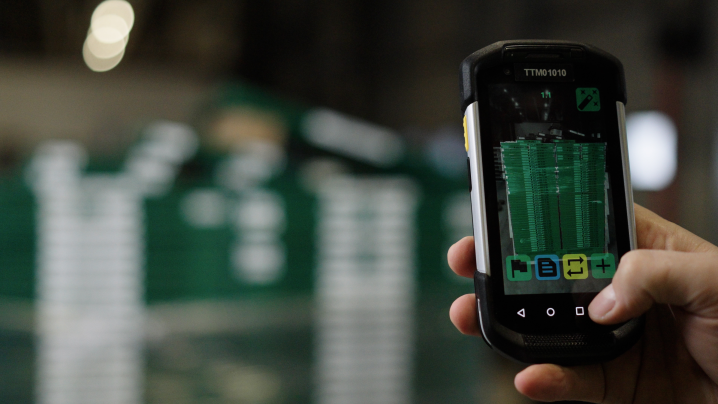
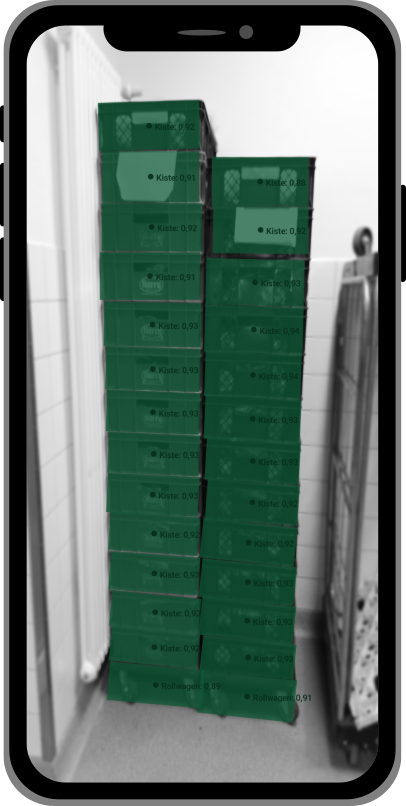
Edge.Count stands for automated quantity capture via camera and AI: returnable containers and load carriers directly at the dock, in the warehouse or on the stop. That cuts estimate errors, paper and recounts and yields consistent data for booking and reconciliation.
Edge.Trace – central transparency and history
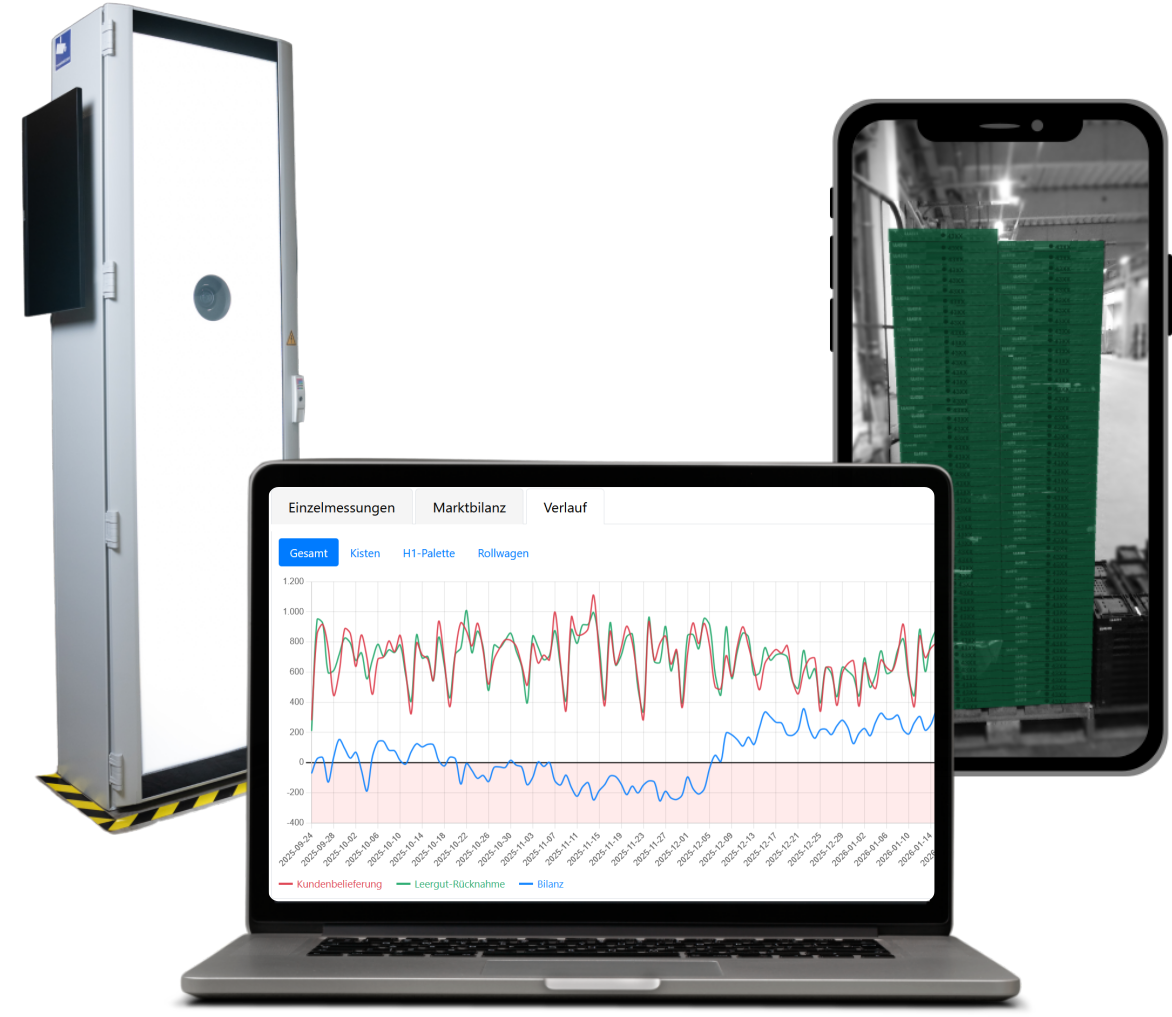
With Edge.Trace you consolidate captures, movements and analytics on one platform – a shared data basis for logistics, partners and controlling, with traceable events instead of isolated lists.
ScanGate – automation at the pass-through
The Edge.ScanGate family (counting gates, scan gates, etc.) handles recurring capture in goods receipt or at fixed points and feeds structured data into downstream systems.
Software for container and empty-container management
The software for container management and empty-container (returnable) management links capture, stock, variances and roles in one end-to-end model – for example with image-linked events, site logic and ties to ERP/WMS processes.
Practical example: At organic bakery chain BioBackHaus (case study in German), the focus included insulated containers instead of single-use insulation, high empty-container values and reliable data across many outlets – a pattern that fits the stronger emphasis on returnables and traceable loops, without deriving specific PPWR duties for any single case from that story.
Deep dive: returnables, bakery, software
These three pieces pick up the themes from this article in practice – from AI counting and bakery logistics to end-to-end software for container loops.
How to read this article
This article is for factual information and is not legal advice. Which obligations apply to your company depends on your role, materials, products and national rules and should be clarified with qualified specialists.
PixelEdge solutions support operational processes and data quality in returnable and empty-container loops; they do not automatically assess or fulfil all regulatory PPWR requirements (for example on packaging design, EPR or labelling).
Frequently asked questions on the PPWR and logistics
What is the PPWR? +
The PPWR (Packaging and Packaging Waste Regulation) is Regulation (EU) 2025/40 on packaging and packaging waste. It implements EU-wide objectives and requirements on waste prevention, recyclability, reuse and extended producer responsibility, among other things, and repeals the former Directive 94/62/EC. The official text is on EUR-Lex as CELEX:32025R0040.
When does the PPWR apply and what does it mean for companies? +
The regulation is published and contains staggered deadlines. Among other things, Directive 94/62/EC is repealed with effect from 12 August 2026; many individual requirements have their own dates or depend on delegated acts. Your organisation should therefore verify timelines and obligations with legal and compliance.
Must manufacturers switch from single-use to returnable logistics packaging? +
The PPWR does not impose a blanket obligation on all producers to use only returnable logistics packaging from one uniform date. What applies depends inter alia on packaging type, purpose (e.g. transport vs. sales packaging) and your role in the supply chain; there are also staggered deadlines and sometimes exceptions. The wording on EUR-Lex (CELEX:32025R0040) and your case-by-case review with legal and compliance are decisive. Operationally: anyone moving from single-use to returnables or pooling needs auditable quantity and movement data so capital tied up in containers and shrink stay manageable.
Which companies are affected by the PPWR? +
In principle, all economic operators along the packaging chain who place packaging on the market or use it can be affected – from manufacturers and importers through retailers to logistics service providers, depending on the requirement in the relevant article of the regulation. Scope and deadlines are not the same for every role; a case-by-case review makes sense.
PPWR and national packaging law (e.g. Germany) – what is the difference? +
The PPWR is an EU regulation (EU) 2025/40 and applies directly in the Member States. National rules – for example Germany’s Packaging Act (Verpackungsgesetz) and related legislation – remain relevant where they apply in parallel or are adapted, without being displaced by directly applicable EU law. Overlaps and precedence should be clarified with specialists in each case.
Does PixelEdge software satisfy the PPWR? +
No, not as a blanket claim. PixelEdge focuses on digital capture, transparency and control of returnable containers and empty goods (Edge.Count, Edge.Trace, ScanGate, container-management software). That can help run loops more efficiently and traceably, but it does not replace material lists, registrations or other specific PPWR obligations of your company.
Why is returnable logistics relevant to the PPWR? +
Policy and the market push for less single-use and more stable loops. As a result, volume and value of returnable packaging and transport containers often rise. That is where operational bottlenecks appear: counting, stock visibility, partner alignment and evidence. PixelEdge solutions address that layer – independent of how consumer packaging is labelled.
How can returnable processes be digitised? +
Returnable processes can be digitised through unified capture (e.g. camera and AI or fixed pass-through points), central data for movements and stock, and connection to ERP or WMS. PixelEdge offers among others Edge.Count, Edge.Trace, ScanGate and software for container and returnable management – see the product sections in this article.
What are the consequences of not complying with the PPWR? +
Consequences depend on the type of breach, market surveillance and national law. Examples include issues with placing products on the market, authority orders, contractual disadvantages with customers and partners, or reputational damage. Specific fines or penalties cannot be stated in general terms here; seek legal advice if needed.
Where can I read more on returnables, bakery and software? +
We link deeper articles and product pages in Deep dive: returnables, bakery, software in this article – including the returnables blog with Edge.Count and Edge.Trace, the bakery-crates piece and the overview page for container and returnable-management software.
Free transparency check (about 30 minutes)
In a no-obligation conversation we show you where you lose transparency in returnable and empty-container loops today – and what savings potential that creates for booking, partner alignment and controlling. No legal advice on the PPWR; focus on processes, capture and data. Technically aligned with Edge.Count, Edge.Trace and container-management software.